Accession Data:
Cola acuminata Schott & Endl.
- Common Name: Cola Nut
- Family: Malvaceae Juss.
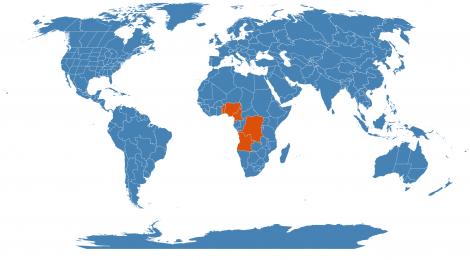
- Country of Origin: West Africa
- Habitat: Tree, 40 to 60 feet tall (12-18 m)
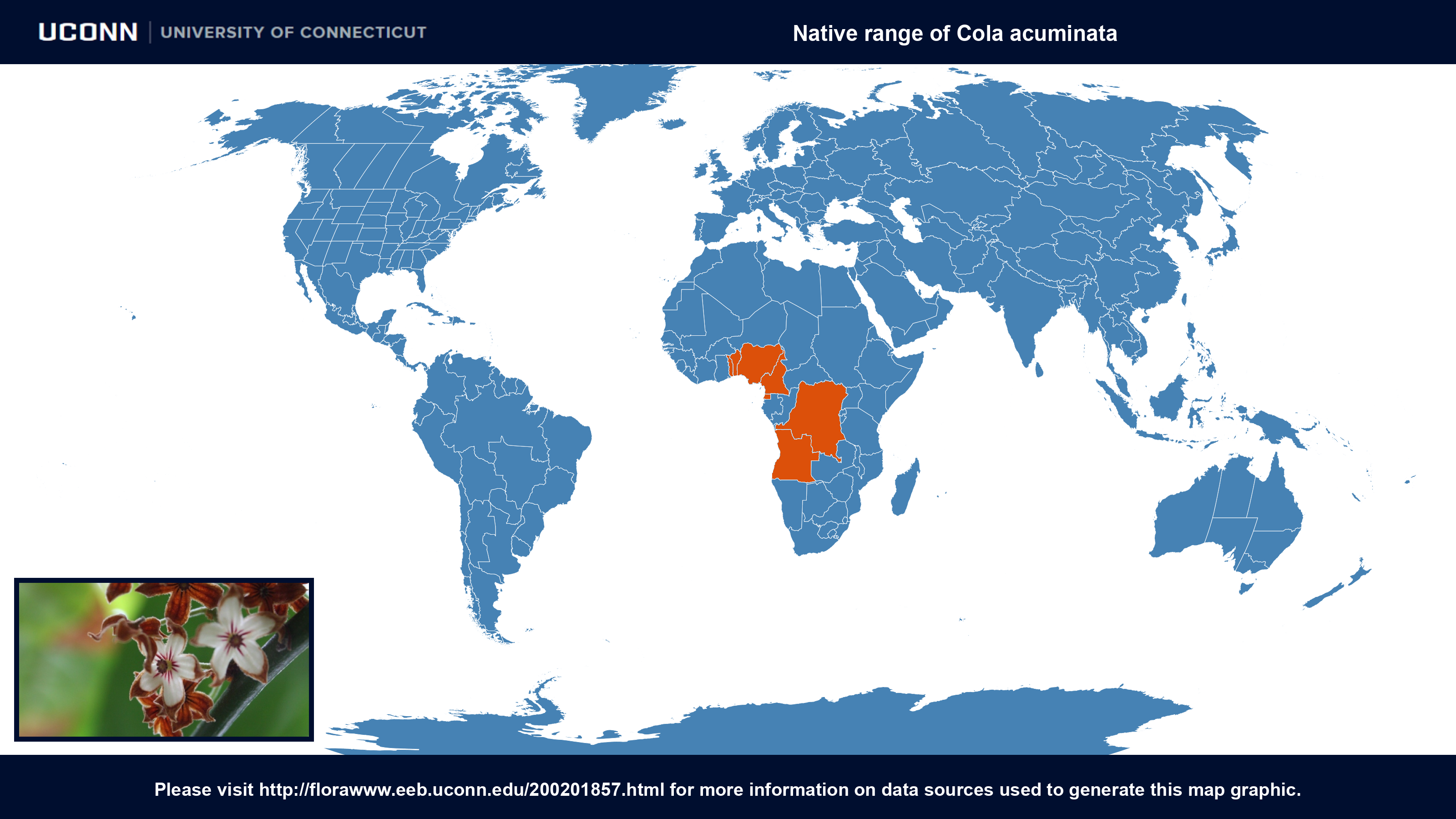
- Description: The Cola Nut, a medium-sized tree native to West Africa, is now grown in many parts of the Tropics. Its bark is smooth. The leathery elliptic leaves are dark green, keeled at the midrib, and often twisted at the tip.
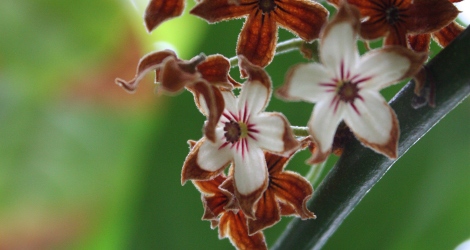
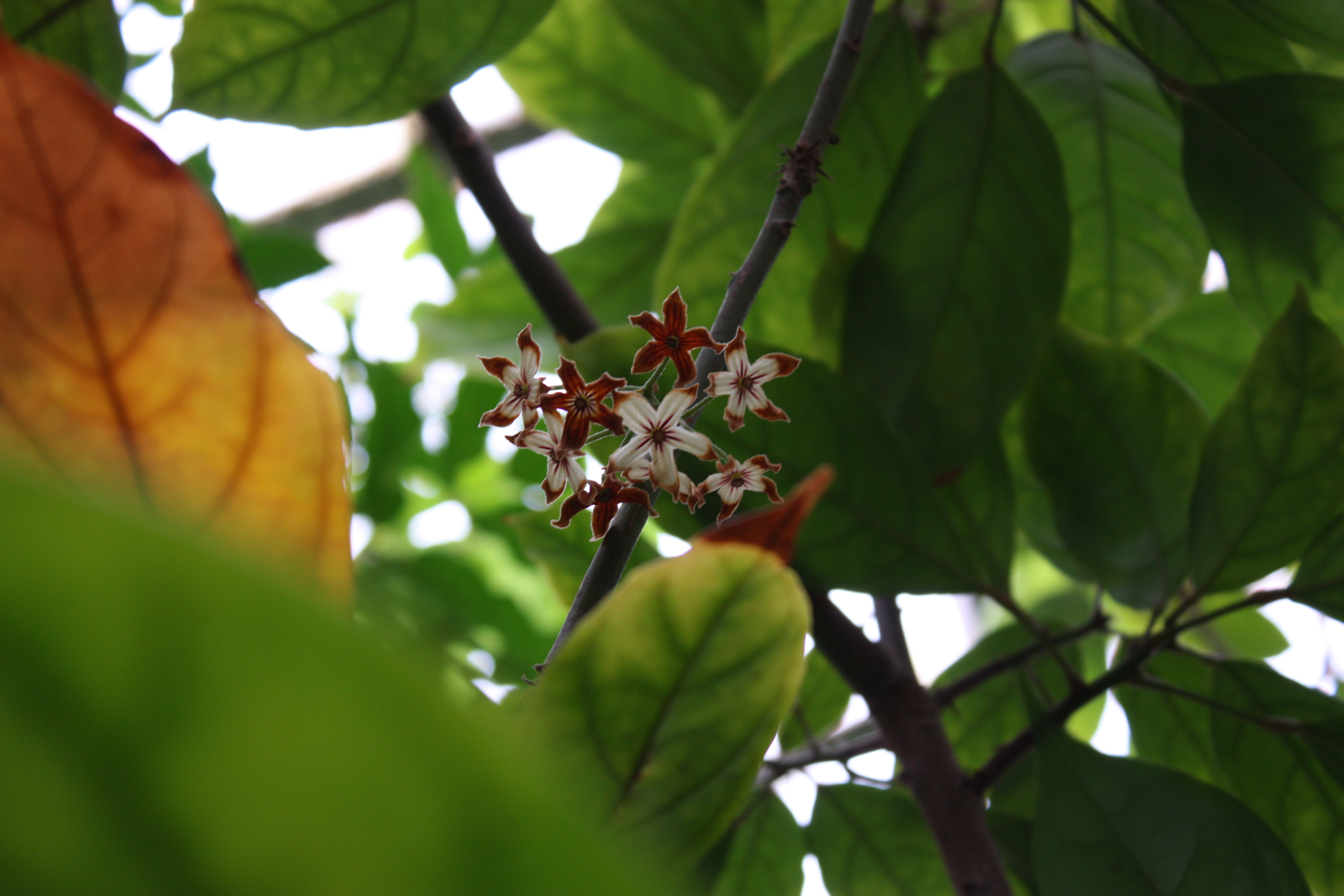
The small flowers, which lack true petals, are borne in clusters of 10 to 15 in axillary and terminal panicles. The flowers are greenish-yellow or white and purple at the margins of the petals. Both male and perfect flowers are produced on the same inflorescence.
The fruit is a follicle, which is corky or rough on the surface and may be 8 inches (20 cm) in length. The ovoid or angular seeds are covered with a white skin that is thin but rather fleshy. Within the seedcoat the seeds are commonly red, but may be pink or white. The cotyledons are tender and succulent but bitter in taste.
- Uses: Cola nuts are chewed for the stimulating effect of the alkaloids caffeine and theobromine they contain. The cola nut is widely grown in West Africa and has particular uses in the social life and religious customs of the people. In Nigeria and Cameroon, four species of cola with edible seed have been distinguished.
Cola extract is what gives their names to cola drinks.- IMPORTANT NOTE: Plant Uses are for informational purposes only. EEB Greenhouses assume no responsibility for adverse effects from the use of any plants referred to on this site. Always seek advice from a professional before using any plant medicinally.
- Culture: The cola nut is usually propagated by seeds but can be propagated asexually by cuttings. The trees are slow growing and require 7 to 10 years to come into bearing. The trees, however, are long-lived and may bear fruit for 75 to 100 years.
- USDA Zone: 11-12
Accession Data:
- Accession # 200201857
- Source: Jodi Bjork - University of Minnesota
- Recorded Vouchers:
- Voucher 217615 at George Safford Torrey Herbarium (CONN). Specimen collected 6 July 2010. Herbarium Image
- Accession Date: 07-29-2002
- Bench: 1111 - AFR:Ground Bed 1 SE
- Currently: active - healthy
- Qty: 1 confirmed on 07-01-2025
Classification:
- Division: Magnoliophyta
- Class: Magnoliopsida
- SubClass: eurosid II
- Order: Malvales
- SubOrder:
- Family: Malvaceae
- SubFamily: Sterculioideae
- Tribe: Sterculieae
- SubTribe:
Flowering Data:
This accession has been observed in bloom on:| Year | Jan | Feb | Mar | Apr | May | Jun | Jul | Aug | Sep | Oct | Nov | Dec | ||||||||||||||||||||||||||||||||||||||||
|---|---|---|---|---|---|---|---|---|---|---|---|---|---|---|---|---|---|---|---|---|---|---|---|---|---|---|---|---|---|---|---|---|---|---|---|---|---|---|---|---|---|---|---|---|---|---|---|---|---|---|---|---|
| 2025 | ||||||||||||||||||||||||||||||||||||||||||||||||||||
| 2024 | ||||||||||||||||||||||||||||||||||||||||||||||||||||
| 2023 | ||||||||||||||||||||||||||||||||||||||||||||||||||||
| 2022 | ||||||||||||||||||||||||||||||||||||||||||||||||||||
| 2021 | ||||||||||||||||||||||||||||||||||||||||||||||||||||
| 2020 | ||||||||||||||||||||||||||||||||||||||||||||||||||||
| 2019 | ||||||||||||||||||||||||||||||||||||||||||||||||||||
| 2018 | ||||||||||||||||||||||||||||||||||||||||||||||||||||
| 2017 | ||||||||||||||||||||||||||||||||||||||||||||||||||||
| 2016 | ||||||||||||||||||||||||||||||||||||||||||||||||||||
| 2015 | ||||||||||||||||||||||||||||||||||||||||||||||||||||
| 2014 | ||||||||||||||||||||||||||||||||||||||||||||||||||||
| 2013 | ||||||||||||||||||||||||||||||||||||||||||||||||||||
| 2012 | ||||||||||||||||||||||||||||||||||||||||||||||||||||
| 2011 | ||||||||||||||||||||||||||||||||||||||||||||||||||||
| 2010 | ||||||||||||||||||||||||||||||||||||||||||||||||||||
References (internal):
- Medicinal Plants
- Bee Pollination (melittophily)
- Beverage Plants
- EEB 3271 - Systematic Botany
- Plants with Vouchers deposited in CONN
- Scavenger Hunt - Grades 9-12 (generic)
- Medicinal Plants - Traditional African Medicine
- EEB Greenhouse Holdings native to: Benin / Nigeria / Togo / Cameroon / Equatorial Guinea / Zaire / Angola
References (external):
- Desert Tropicals Website
- The Plant List (2013). Version 1.1. Last accessed on Monday, September 04, 2017.
- Cola acuminata at ARS-GRIN. Last accessed on Monday, September 04, 2017.
data regenerated on Fri, 11 Jul 2025 15:03:47 -0400 [bcm v4.0]
Images:
Additional images for this accession:
Click on thumbnails to enlarge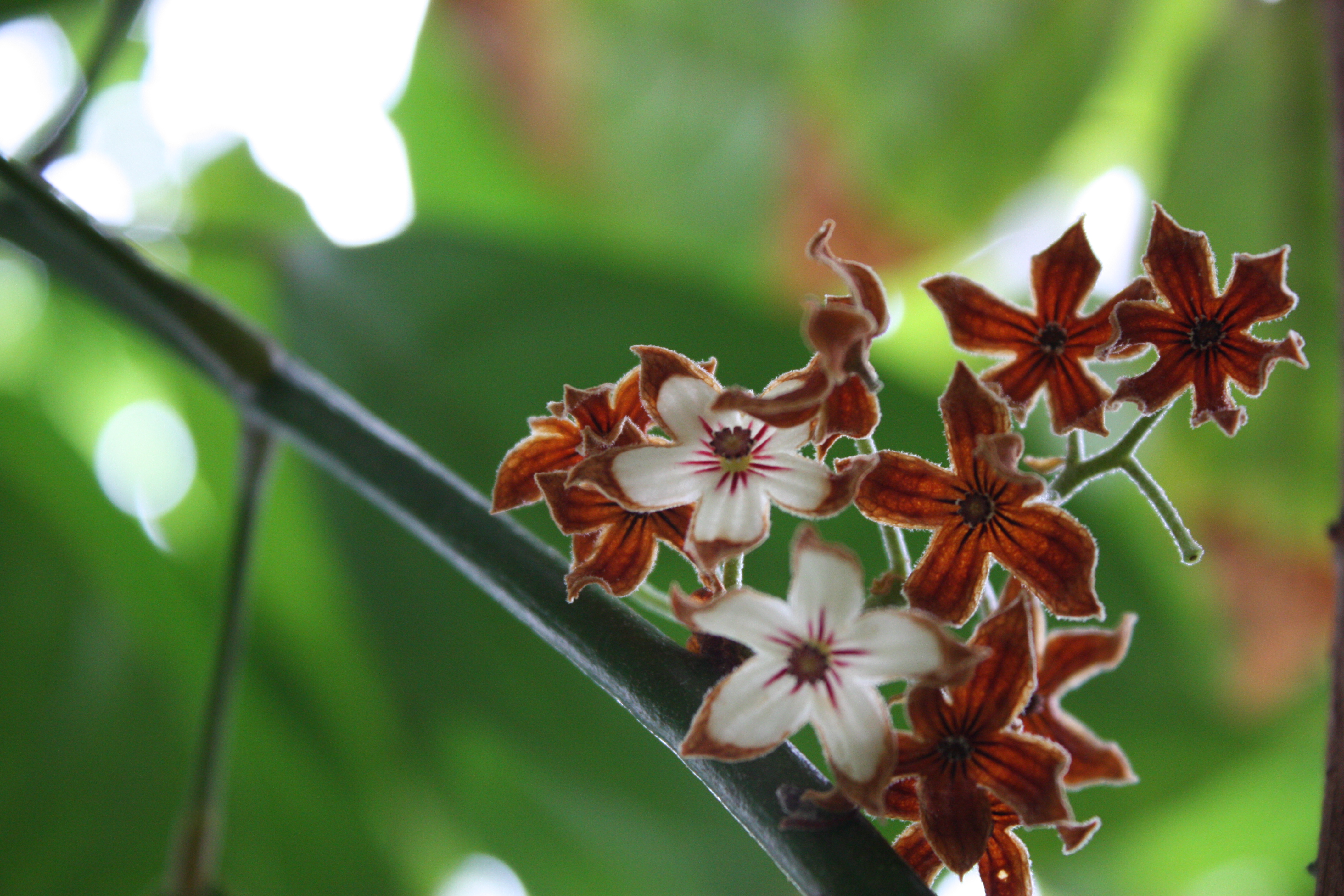
Current Accessions in the Malvaceae
Subfamily Bombacoideae
Tribe Adansonieae
- Adansonia digitata

- Adansonia grandidieri
- Adansonia za
- Ceiba acuminata
- Ceiba pentandra

- Ceiba speciosa
- Pachira aquatica
- Pachira aquatica
- Pachira glabra
- Pseudobombax ellipticum
Subfamily Byttneroideae
Tribe Hermannieae
Subfamily Byttneroideae
Tribe Theobromeae
Subfamily Dombeyoideae
Tribe Dombeyeae
Subfamily Grewioideae
Tribe Grewieae
Subfamily Grewioideae
Tribe Sparrmannieae
Subfamily Malvoideae
Tribe Gossypieae

Subfamily Malvoideae
Tribe Hibisceae
- Hibiscus acetosella 'Haight Ashbury'
- Hibiscus rosa-sinensis cv. (yellow)

- Hibiscus tilliaceus
- Lagunaria patersonia
- Pavonia strictiflora
Subfamily Malvoideae
Tribe Malveae
Subfamily Sterculioideae
Tribe Sterculieae
W/C = Wild Collected
 = indicates flowering in past 14 days
= images available for this accession
= map available for this accession
= indicates flowering in past 14 days
= images available for this accession
= map available for this accession
 = accession added within past 90 days