Accession Data:
Mandragora autumnalis Bertol.
- Common Name: Autumn Mandrake
- Family: Solanaceae Juss.
- Synonym(s): Mandragora officinarum L.
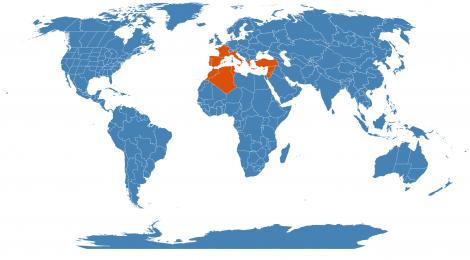
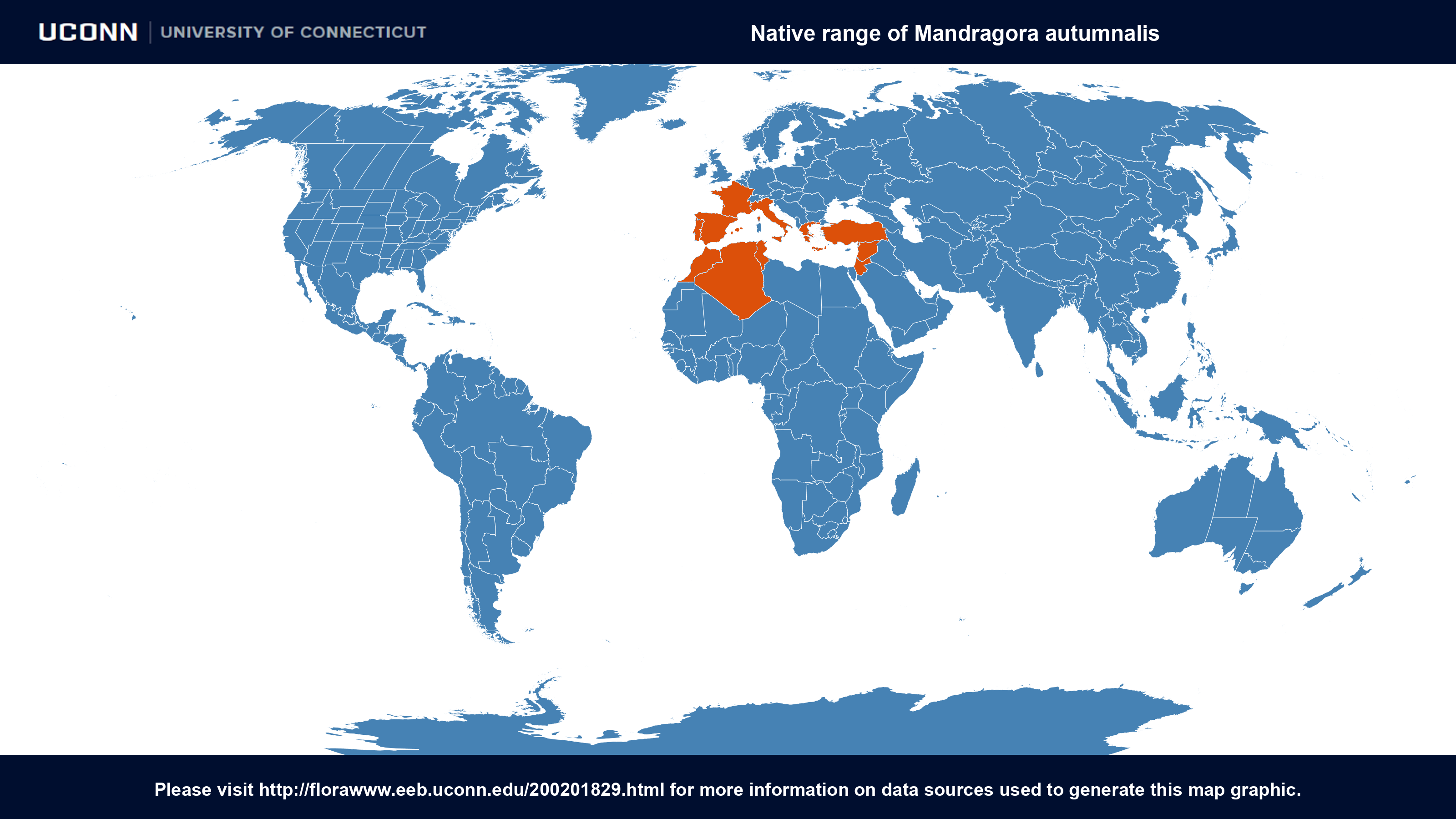
- Country of Origin: southern Europe
- Habitat: stemless herbaceous perennial
- Description: Mandragora autumnalis is considered a synonym of M. officinarum by some authorities, while others consider it a distinct species. Molecular evidence suggests that it is indeed distinct and we have treated it as such here.1,3
Mandragora autumnalis is a perennial herb with thick tuberous roots native to Southern Europe. Mandrake roots contain the alkaloid hyoscymine that is used for motion sickness and as a preoperative anesthetic. In early times Mandrake had magical properties ascribed to it because the roots sometimes have humanlike form. 2
- Uses: Mandrake has had many reputed medicinal qualities but most of them have been dispelled. Ingestion of sufficient quantities of Mandragora are often fatal.
- IMPORTANT NOTE: Plant Uses are for informational purposes only. EEB Greenhouses assume no responsibility for adverse effects from the use of any plants referred to on this site. Always seek advice from a professional before using any plant medicinally.
- Culture: It likes a light, deep soil, as the roots run far down. They will do poorly in a soil that is chalky or excessively gravelly. If the soil is too wet in winter, the roots will rot. It is propagated from seeds which should be sown in deep flats or, better, singly in pots. These should be kept well-watered and when they reach a good size they should be carefully set out at least 2 feet apart.
Accession Data:
- Accession # 200201829
- Source: Matt Opel ex Horizon Herbs (seed)
- Provenance:
Plant grown from seed (labelled Mandragora officinalis).
Later determined by Matt Opel to be Mandragora autumnalis (most likely) due to fall blooming and purple flowers.
Name changed 22DEC2011 by CMORSE.
- Accession Date: 07-03-2002
- Bench: 2101 - MED:Mediterranean A
- Currently: dormant
- Qty: 1 confirmed on 01-02-2025
- Restrictions:
- Poisonous Plant Parts - Not for Human Consumption
Mandrake posesses high content of the alkaloids scopolamine, mandragorin, and hyosciamine.
- Poisonous Plant Parts - Not for Human Consumption
Classification:
- Division: Magnoliophyta
- Class: Magnoliopsida
- SubClass: euasterid I
- Order: Solanales
- SubOrder:
- Family: Solanaceae
- SubFamily: Solanoideae
- Tribe:
- SubTribe:
Flowering Data:
This accession has been observed in bloom on:| Year | Jan | Feb | Mar | Apr | May | Jun | Jul | Aug | Sep | Oct | Nov | Dec | ||||||||||||||||||||||||||||||||||||||||
|---|---|---|---|---|---|---|---|---|---|---|---|---|---|---|---|---|---|---|---|---|---|---|---|---|---|---|---|---|---|---|---|---|---|---|---|---|---|---|---|---|---|---|---|---|---|---|---|---|---|---|---|---|
| 2025 | ||||||||||||||||||||||||||||||||||||||||||||||||||||
| 2024 | ||||||||||||||||||||||||||||||||||||||||||||||||||||
| 2023 | ||||||||||||||||||||||||||||||||||||||||||||||||||||
| 2022 | ||||||||||||||||||||||||||||||||||||||||||||||||||||
| 2021 | ||||||||||||||||||||||||||||||||||||||||||||||||||||
| 2020 | ||||||||||||||||||||||||||||||||||||||||||||||||||||
| 2019 | ||||||||||||||||||||||||||||||||||||||||||||||||||||
| 2018 | ||||||||||||||||||||||||||||||||||||||||||||||||||||
| 2017 | ||||||||||||||||||||||||||||||||||||||||||||||||||||
| 2016 | ||||||||||||||||||||||||||||||||||||||||||||||||||||
| 2015 | ||||||||||||||||||||||||||||||||||||||||||||||||||||
| 2014 | ||||||||||||||||||||||||||||||||||||||||||||||||||||
| 2013 | ||||||||||||||||||||||||||||||||||||||||||||||||||||
| 2012 | ||||||||||||||||||||||||||||||||||||||||||||||||||||
| 2011 | ||||||||||||||||||||||||||||||||||||||||||||||||||||
| 2010 | ||||||||||||||||||||||||||||||||||||||||||||||||||||
| 2009 | ||||||||||||||||||||||||||||||||||||||||||||||||||||
References (internal):
- EEB Greenhouse Holdings native to: Baleares / Corse / France / Portugal / Spain / Greece / Kriti / Italy / Sicilia / Algeria / Morocco / Tunisia / Lebanon-Syria / Palestine / Turkey
References (external):
- Mandragora autumnalis at Wikipedia. Last accessed on Wednesday, April 18, 2018.
- Cal's Plant of the Week
- The Plant List (2013). Version 1.1. Last accessed on Wednesday, April 18, 2018.
- Mandragora autumnalis at IUCN Redlist. Last accessed on Wednesday, April 18, 2018.
data regenerated on Sat, 25 Jan 2025 12:03:32 -0500 [bcm v4.0]
Images:
Additional images for this accession:
Click on thumbnails to enlargeCurrent Accessions in the Solanaceae
Subfamily Browallioideae
Tribe Cestreae
Subfamily Nicotianoideae
Subfamily Petunioideae
Subfamily Solanoideae
Subfamily Solanoideae
Tribe Capsiceae
Subfamily Solanoideae
Tribe Datureae
Subfamily Solanoideae
Tribe Hyoscyameae
Subfamily Solanoideae
Tribe Juanulloeae
Subfamily Solanoideae
Tribe Lycieae
Subfamily Solanoideae
Tribe Physaleae
- Iochrominae: Iochroma cyaneum Royal Blue


- Iochrominae: Iochroma fuchsioides
- Withaninae: Withania riebeckii W/C
- Withaninae: Withania somnifera
Subfamily Solanoideae
Tribe Solaneae
- Jaltomata quipuscoae
- Solanum conocarpum
- Solanum conocarpum
- Solanum ensifolium
- Solanum ensifolium W/C
- Solanum seaforthianum
- Solanum wendlandii
 = indicates flowering in past 14 days
= images available for this accession
= map available for this accession
= indicates flowering in past 14 days
= images available for this accession
= map available for this accession
 = accession added within past 90 days