Accession Data:
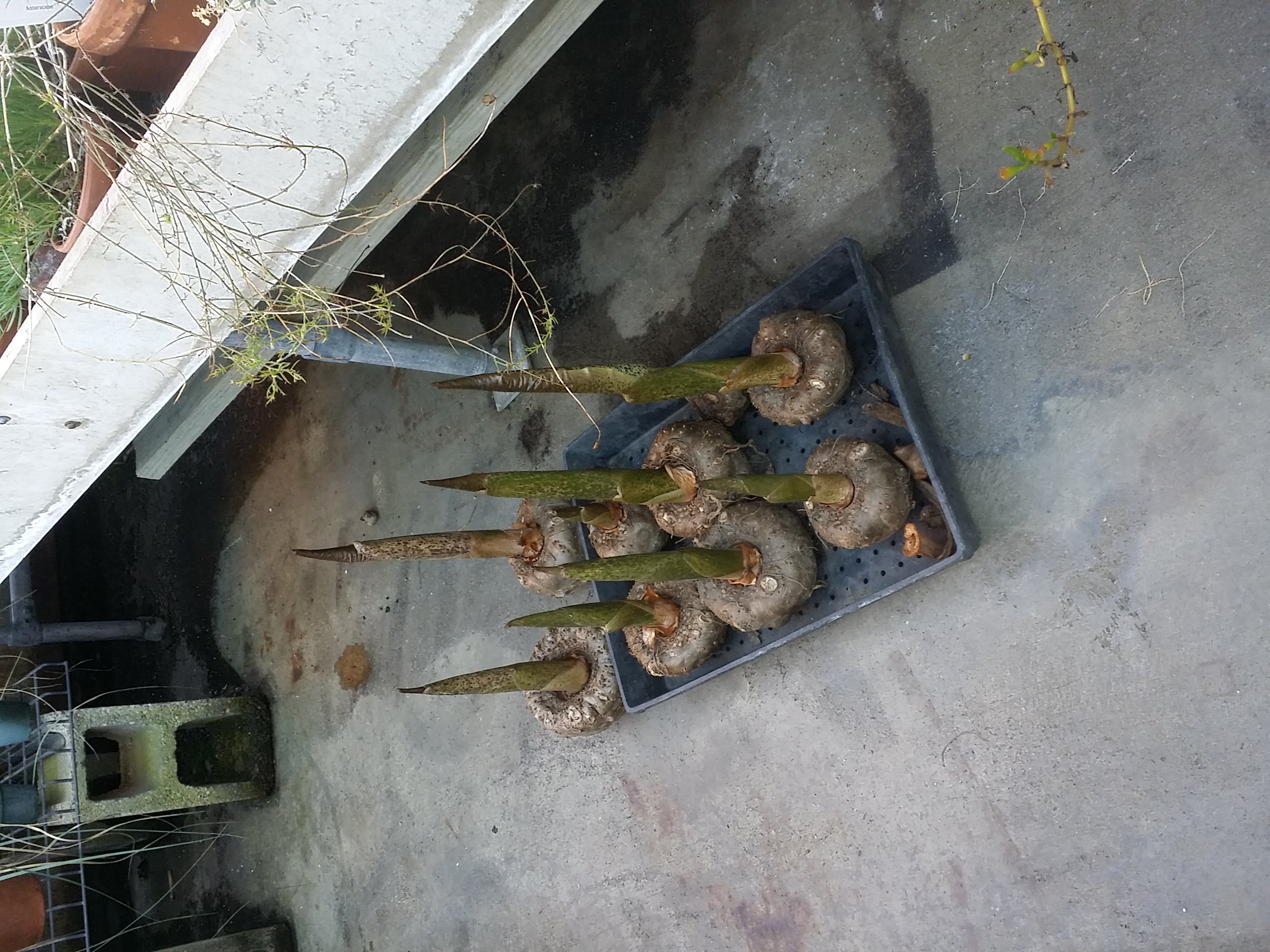
Amorphophallus konjac K. Koch
- Common Name: Devil's Tongue
- Family: Araceae Juss.
- Synonym(s): Amorphophallus rivieri Durand ex Carrière, Proteinophallus rivieri (Durand ex Carrière) Hook.f.
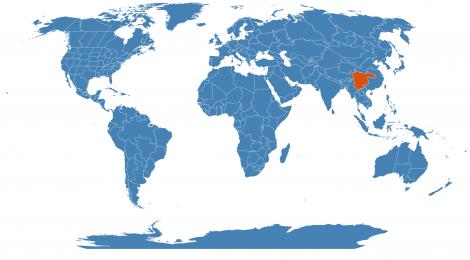
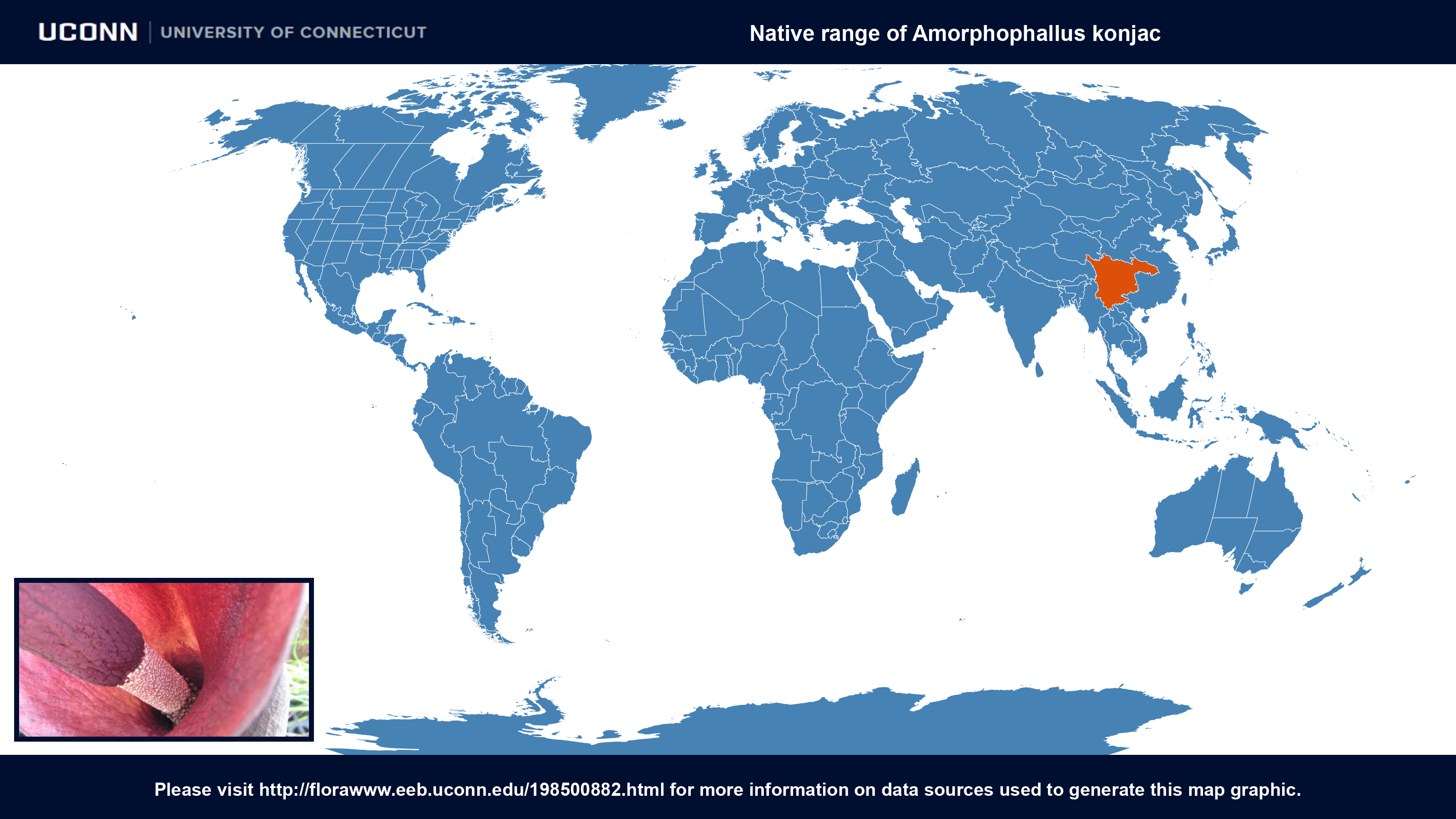
- Country of Origin: China (Yunnan)
- Description: Much grown from Indonesia to Japan for edible corms.
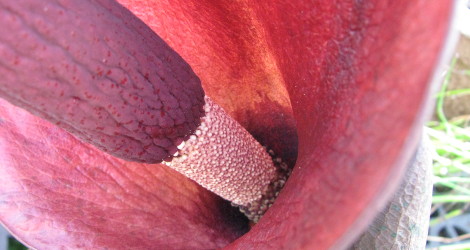
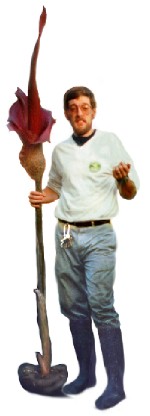
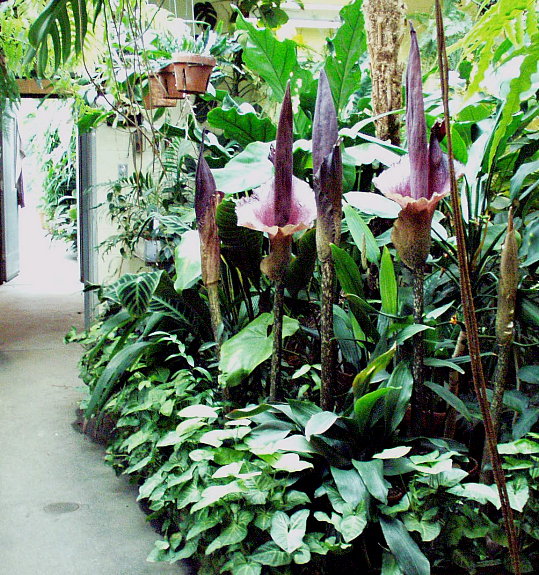
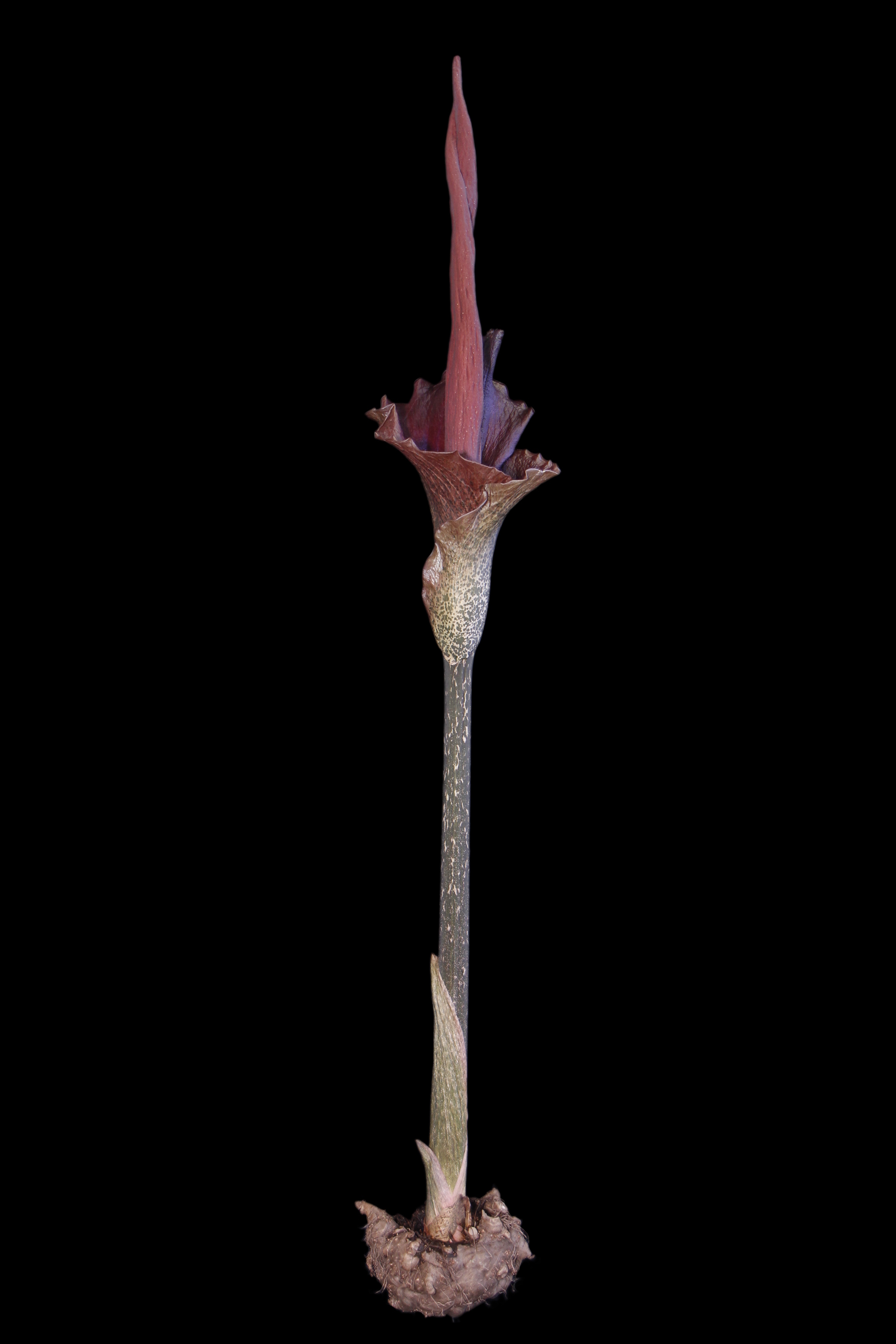
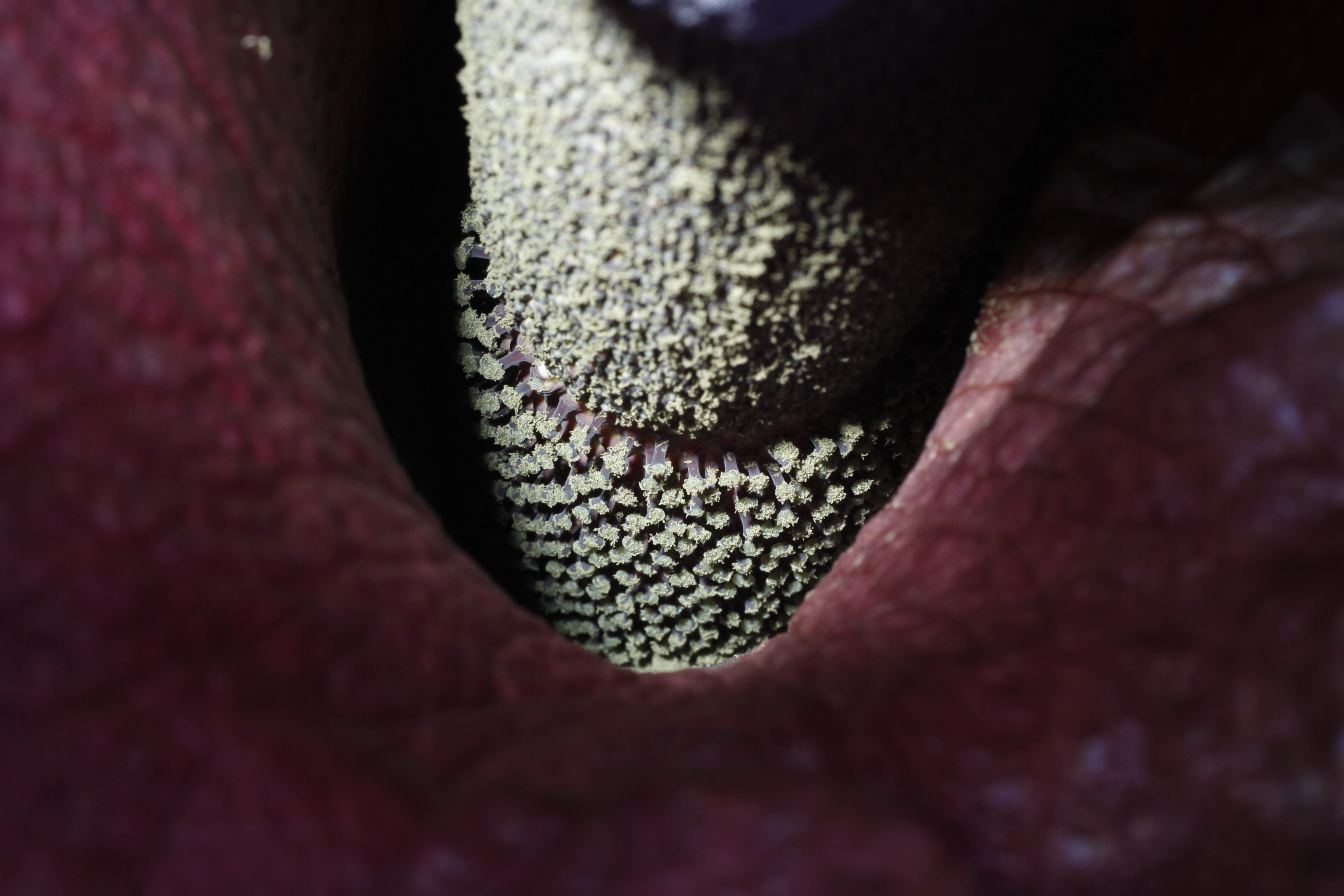
Tuber about 10 in. across, flattish round. l. stalk 15 to 30 in. long, brownish green spotted white; blade large, 3-sect, ultimate segs. oblong-elliptic, cuspidate. Peduncle 2 ft. long. Spathe 8-12" long, ovate, tube about 3" long, pale green with greenish white spots, margin purplish, blade 8" long, wide roundish-cordate, acute, green without, dark purple within, margin undulate.
- Uses: It is very popular in Japan as a cooking supplement for soups and stew-like dishes. The tuber are raised and then cooked (usually cooking is also done on a commercial basis) or reduced to a substance somewhat stiffer than gelatin. The resultant material is pressed into blocks and sold like tofu in the grocery stores. The Japanese pronounce it cone-yuk. The name Amorphophallus is not generally associated with the product to the lay person.
The main substance in konjac is called Glucomannan which has a low caloric content but is rich in dietary fiber. Clinical study indicates the Glucomannan may be responsible for weight reduction and reducing cholesterol in those who have high cholesterol. It is eaten in Japan to clean the digestive tract of toxins.
- Culture: Corm can be stored dry.
- USDA Zone: 6a-11
Accession Data:
- Accession # 198500882
- Source: Unknown
- Accession Date: 02-04-1997
- Bench: 2201 - XER:Madagascar Spiny Thicket A
- Currently: active - healthy
- Qty: 4 confirmed on 04-24-2025
Classification:
- Division: Magnoliophyta
- Class: Liliopsida
- SubClass: monocots
- Order: Alismatales
- SubOrder:
- Family: Araceae
- SubFamily: Aroideae
- Tribe: Thomsonieae
- SubTribe:
Flowering Data:
This accession has been observed in bloom on:| Year | Jan | Feb | Mar | Apr | May | Jun | Jul | Aug | Sep | Oct | Nov | Dec | ||||||||||||||||||||||||||||||||||||||||
|---|---|---|---|---|---|---|---|---|---|---|---|---|---|---|---|---|---|---|---|---|---|---|---|---|---|---|---|---|---|---|---|---|---|---|---|---|---|---|---|---|---|---|---|---|---|---|---|---|---|---|---|---|
| 2025 | ||||||||||||||||||||||||||||||||||||||||||||||||||||
| 2024 | ||||||||||||||||||||||||||||||||||||||||||||||||||||
| 2023 | ||||||||||||||||||||||||||||||||||||||||||||||||||||
| 2022 | ||||||||||||||||||||||||||||||||||||||||||||||||||||
| 2021 | ||||||||||||||||||||||||||||||||||||||||||||||||||||
| 2020 | ||||||||||||||||||||||||||||||||||||||||||||||||||||
| 2019 | ||||||||||||||||||||||||||||||||||||||||||||||||||||
| 2018 | ||||||||||||||||||||||||||||||||||||||||||||||||||||
| 2017 | ||||||||||||||||||||||||||||||||||||||||||||||||||||
| 2016 | ||||||||||||||||||||||||||||||||||||||||||||||||||||
| 2015 | ||||||||||||||||||||||||||||||||||||||||||||||||||||
| 2014 | ||||||||||||||||||||||||||||||||||||||||||||||||||||
| 2013 | ||||||||||||||||||||||||||||||||||||||||||||||||||||
| 2012 | ||||||||||||||||||||||||||||||||||||||||||||||||||||
| 2011 | ||||||||||||||||||||||||||||||||||||||||||||||||||||
| 2010 | ||||||||||||||||||||||||||||||||||||||||||||||||||||
| 2009 | ||||||||||||||||||||||||||||||||||||||||||||||||||||
| 2008 | ||||||||||||||||||||||||||||||||||||||||||||||||||||
| 2007 | ||||||||||||||||||||||||||||||||||||||||||||||||||||
| 2006 | ||||||||||||||||||||||||||||||||||||||||||||||||||||
| 2005 | ||||||||||||||||||||||||||||||||||||||||||||||||||||
References (internal):
- EEB Greenhouse Holdings native to: China South-Central /
References (external):
- RHS Dictionary of Gardening
- Aroid-L posting dated 2/2/97 by Tim McNinch
- The Plant List (2013). Version 1.1. Accessed 21 May 2015.
- WCSP (2015). World Checklist of Selected Plant Families. Facilitated by the Royal Botanic Gardens, Kew. Accessed 21 May 2015
data regenerated on Wed, 02 Jul 2025 09:57:30 -0400 [bcm v4.0]
Images:
Additional images for this accession:
Click on thumbnails to enlarge
Current Accessions in the Araceae
Subfamily Aroideae
Subfamily Aroideae
Tribe Anubiadeae
Subfamily Aroideae
Tribe Areae
Subfamily Aroideae
Tribe Arisaemateae
Subfamily Aroideae
Tribe Caladieae
Subfamily Aroideae
Tribe Colocasieae
- Alocasia Amazonica


- Alocasia cuprea

- Alocasia melo
- Alocasia Micholitziana
- Colocasia affinis
- Colocasia esculenta
- Colocasia fallax
- Colocasia gigantea cv. Thailand Giant
- Remusatia vivipara
Subfamily Aroideae
Tribe Culcasieae
Subfamily Aroideae
Tribe Dieffenbachieae
Subfamily Aroideae
Tribe Philodendreae
- Philodendron angustisectum
- Philodendron atabapoense
- Philodendron bipinnatifidum
- Philodendron brandtianum
- Philodendron crassinervium
- Philodendron gloriosum
- Philodendron grazielae
- Philodendron hederaceum var. oxycardium
- Philodendron imbe
- Philodendron joepii
- Philodendron ornatum
- Philodendron panduriforme
- Philodendron patriciae W/C
- Philodendron pedatum
- Philodendron tripartitum
- Philodendron verrucosum
Subfamily Aroideae
Tribe Pisteae
Subfamily Aroideae
Tribe Spathicarpeae
Subfamily Aroideae
Tribe Thomsonieae
- Amorphophallus albus
- Amorphophallus bulbifer
- Amorphophallus dunnii
- Amorphophallus henryi
- Amorphophallus impressus
- Amorphophallus konjac
- Amorphophallus muelleri
- Amorphophallus paeoniifolius
- Amorphophallus pygmaeus W/C
- Amorphophallus titanum
- Amorphophallus titanum
- Amorphophallus titanum
- Amorphophallus titanum
- Amorphophallus variabilis
- Amorphophallus yunnanensis
- Amorphophallus yunnanensis
Subfamily Aroideae
Tribe Zantedeschieae
Subfamily Lasioideae
Subfamily Lemnoideae
Subfamily Monsteroideae
Tribe Monstereae
- Epipremnum falcifolia
- Epipremnum pinnatum
- Monstera adansonii
- Monstera deliciosa
- Monstera dubia
- Monstera siltepecana
- Monstera subpinnata
- Rhaphidophora cryptantha
- Rhaphidophora decursiva
- Rhaphidophora korthalsii
- Rhaphidophora sulcata
- Scindapsus pictus
- Scindapsus pictus 'Exotica'
- Stenospermation sp.
Subfamily Monsteroideae
Tribe Spathiphylleae
Subfamily Pothoideae
Tribe Anthurieae
- Anthurium andraeanum
- Anthurium bakeri
- Anthurium crystallinum
- Anthurium cubense
- Anthurium forgetii
- Anthurium forgetii
- Anthurium forgetii
- Anthurium friedrichsthalii
- Anthurium gracile
- Anthurium luxurians
- Anthurium pedatoradiatum
- Anthurium pendens
- Anthurium pentaphyllum var. bombacifolium
- Anthurium podophyllum W/C
- Anthurium pseudospectabile W/C
- Anthurium scandens
- Anthurium schlechtendalii
- Anthurium veitchii
- Anthurium villenaorum
- Anthurium wendlingeri
Subfamily Pothoideae
Tribe Potheae
Subfamily Zamioculcadoideae
W/C = Wild Collected = indicates flowering in past 14 days
= images available for this accession
= map available for this accession
= indicates flowering in past 14 days
= images available for this accession
= map available for this accession
 = accession added within past 90 days