Accession Data:
Selenicereus chrysocardium (Alexander) M. Kimnach
- Common Name: Fernleaf Cactus
- Family: Cactaceae Juss.
- Country of Origin: Mexico: Chaipas
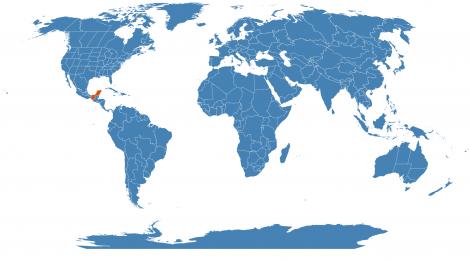
- Habitat: epiphytic in wet forests
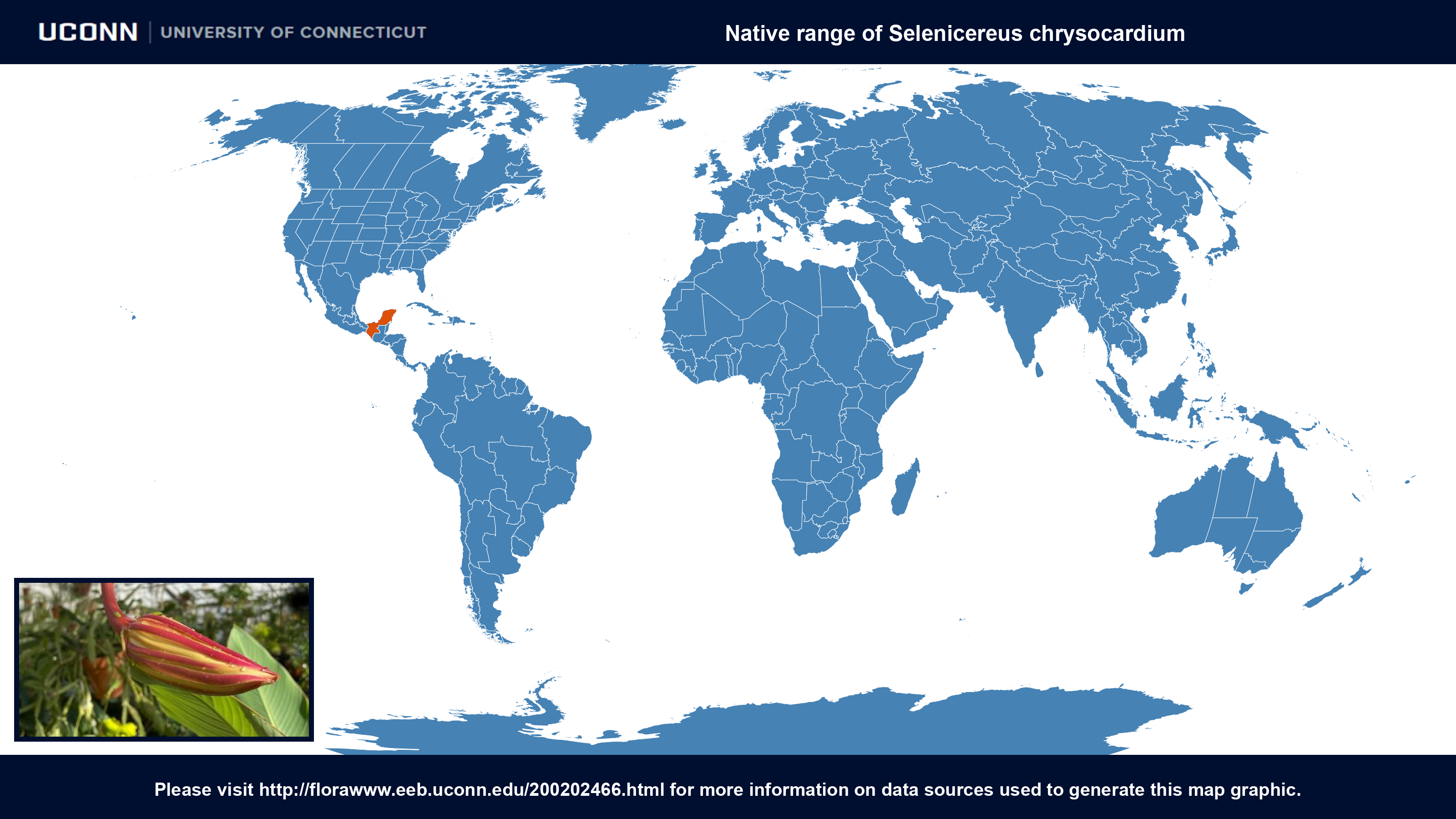
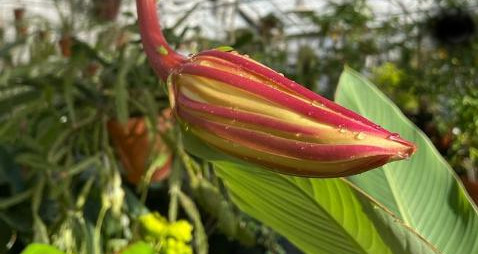
- Description: Stem scandent, up to 30 cm wide, lobed to a slightly 2 edged midrib, the lobes 13-15 cm long, 4cm wide, upcurved at the outer end into tapering tips; areoles small, merely notch-like pits at the base of the upper side of the lobe, sometimes bearing; spines 2-3, usually lacking; epidermis light green, smooth. Flowers to 32 cm long, 20 cm wide, lower 1-2 cm portion of tepals decurrent; receptacle 2 cm long with strong podarias, bracteoles 3-7 mm, pale green and in their axils wool and 2-4 stiff bristles, 2-4 mm long; pericarpel 16 cm long, 11,25 cm thick, pale green on lower 7cm, upper portion stained dull rose-red, bracteoles on receptacle 8-12 mm long, green, the upper ones stained purplish; outer tepals 11-14 cm long, 8-10 mm wide, linear-lanceolate, acute, spreading, outermost series dull purplish rose, nest purplish on midrib, the nest brownish rose-margined; inner tepals 11-14 cm long, -20 mm wide, oblanceolate, abruptly mucronate, shallowly erose at apex, white; stamens 11 cm long, numerous, included, declinate, chrome yellow, attached in a descending series from the top of the throat to halfway down the receptacle, anthers slate-brown, 3 mm long, pollen cream; style 25 cm long, creamy white, 3,5 mm in Ø, stigma lobes 13, 15-20 mm long, subulate, cream colored. Fruit sphaerical, 7 cm thick, green; spines numerous, yellowish.
- Culture: S. chrysocardium is a tricky species to cultivate unless in a tropical greenhouse. It is a fast growing species which can't stand cold situations. Needs a compost containing plenty of humus and sufficient moisture throughout the year. Give a suitable fertilizer during the growing season. Should not be kept under 15ºC (59ºF) in winter. Best grown in semi-shade. In Europe it flowers in the winter.
- USDA Zone: 10a-11
Accession Data:
- Accession # 200202466
- Source: Matt Opel
- Accession Date: 10-23-2002
- Bench: 3307 - NEOB: Bromeliad Island
- Currently: active - healthy
- Qty: 1 confirmed on 05-22-2025
- Restrictions:
- CITES Appendix II Listed Plant
- CITES Appendix II Listed Plant
Classification:
- Division: Magnoliophyta
- Class: Magnoliopsida
- SubClass: core eudicots
- Order: Caryophyllales
- SubOrder:
- Family: Cactaceae
- SubFamily: Cactoideae
- Tribe: Phyllocacteae
- SubTribe: Hylocereinae
Flowering Data:
This accession has been observed in bloom on:| Year | Jan | Feb | Mar | Apr | May | Jun | Jul | Aug | Sep | Oct | Nov | Dec | ||||||||||||||||||||||||||||||||||||||||
|---|---|---|---|---|---|---|---|---|---|---|---|---|---|---|---|---|---|---|---|---|---|---|---|---|---|---|---|---|---|---|---|---|---|---|---|---|---|---|---|---|---|---|---|---|---|---|---|---|---|---|---|---|
| 2025 | ||||||||||||||||||||||||||||||||||||||||||||||||||||
| 2024 | ||||||||||||||||||||||||||||||||||||||||||||||||||||
| 2023 | ||||||||||||||||||||||||||||||||||||||||||||||||||||
| 2022 | ||||||||||||||||||||||||||||||||||||||||||||||||||||
| 2021 | ||||||||||||||||||||||||||||||||||||||||||||||||||||
| 2020 | ||||||||||||||||||||||||||||||||||||||||||||||||||||
| 2019 | ||||||||||||||||||||||||||||||||||||||||||||||||||||
| 2018 | ||||||||||||||||||||||||||||||||||||||||||||||||||||
| 2017 | ||||||||||||||||||||||||||||||||||||||||||||||||||||
| 2016 | ||||||||||||||||||||||||||||||||||||||||||||||||||||
| 2015 | ||||||||||||||||||||||||||||||||||||||||||||||||||||
| 2014 | ||||||||||||||||||||||||||||||||||||||||||||||||||||
| 2013 | ||||||||||||||||||||||||||||||||||||||||||||||||||||
| 2012 | ||||||||||||||||||||||||||||||||||||||||||||||||||||
| 2011 | ||||||||||||||||||||||||||||||||||||||||||||||||||||
| 2010 | ||||||||||||||||||||||||||||||||||||||||||||||||||||
| 2009 | ||||||||||||||||||||||||||||||||||||||||||||||||||||
References (internal):
- EEB Greenhouse Holdings native to: Mexico Southeast
References (external):
- San Diego Epiphyllum Society Website. Last visited 23 October 2002. {defunct Dec 2019}
- The Plant List (2013). Version 1.1. Last accessed on Wednesday, 11 December, 2019.
data regenerated on Thu, 03 Jul 2025 15:33:25 -0400 [bcm v4.0]
Images:
Additional images for this accession:
Click on thumbnails to enlargeCurrent Accessions in the Cactaceae
Subfamily Cactoideae
Tribe Cacteae
- Ariocarpus fissuratus


- Astrophytum capricorne
- Astrophytum myriostigma
- Astrophytum ornatum W/C
- Coryphantha cornifera W/C
- Coryphantha difficilis
- Coryphantha maiz-tablasensis W/C
- Echinocactus grusonii
- Echinocactus texensis W/C
- Epithelantha micromeris W/C
- Escobaria vivipara W/C
- Ferocactus cylindraceus W/C
- Ferocactus echidne W/C
- Ferocactus glaucescens W/C
- Ferocactus glaucescens
- Ferocactus gracilis
- Ferocactus pilosus
- Leuchtenbergia principis
- Mammillaria bocasana
- Mammillaria bombycina
- Mammillaria compressa
- Mammillaria compressa
- Mammillaria glochidiata W/C
- Mammillaria gracilis ssp. minima
- Mammillaria hertrichiana W/C
- Mammillaria hertrichiana W/C
- Mammillaria magnimamma
- Mammillaria mystax
- Mammillaria parkinsonii W/C
- Mammillaria petterssonii W/C
- Mammillaria plumosa
- Mammillaria scheideana W/C
- Mammillaria uncinata W/C
- Mammilloydia candida W/C
- Ortegocactus macdougallii
- Rhipsalidopsis gaertneri

- Stenocactus crispatus W/C
- Stenocactus lamellosus W/C
- Thelocactus rinconensis W/C
- Turbinicarpus jauernigii
Subfamily Cactoideae
Tribe Cereeae
- Cereinae: Cereus forbesii
- Cereinae: Cereus hildmannianus W/C
- Cereinae: Cereus repandus
- Cereinae: Cereus repandus var. monstrosus
- Cereinae: Cipocereus bradei
- Cereinae: Disocactus flagelliformis
- Cereinae: Melocactus azureus
- Cereinae: Melocactus cf. disciformis
- Cereinae: Melocactus ernestii
- Cereinae: Melocactus intortus W/C
- Cereinae: Melocactus matanzanus
- Cereinae: Pilosocereus magnificus
- Cereinae: Pilosocereus pachycladus W/C
- Cereinae: Pilosocereus polygonus W/C
- Cereinae: Pilosocereus purpusii
- Cereinae: Pilosocereus sp.
- Rebutiinae: Browningia hertlingianus
- Rebutiinae: Gymnocalycium capillaense W/C
- Rebutiinae: Gymnocalycium gibbosum W/C
- Rebutiinae: Gymnocalycium monvillei ssp. achirasense W/C
- Rebutiinae: Gymnocalycium pflanzii W/C
- Rebutiinae: Gymnocalycium quehlianum W/C
- Rebutiinae: Rebutia minuscula W/C
- Rebutiinae: Uebelmannia pectinifera
- Trichocereinae: Acanthocalycium klimpelianum W/C
- Trichocereinae: Acanthocalycium klimpelianum W/C
- Trichocereinae: Cleistocactus baumannii ssp. santacruzensis
- Trichocereinae: Cleistocactus fieldianus W/C
- Trichocereinae: Cleistocactus strausii
- Trichocereinae: Discocactus placentiformis
- Trichocereinae: Echinopsis ancistrophora ssp. arachnacantha
- Trichocereinae: Echinopsis atacamensis W/C
- Trichocereinae: Echinopsis aurea W/C
- Trichocereinae: Echinopsis aurea W/C
- Trichocereinae: Echinopsis aurea
- Trichocereinae: Echinopsis calochlora
- Trichocereinae: Echinopsis camarguensis
- Trichocereinae: Echinopsis eyriesii
- Trichocereinae: Echinopsis subdenudata
- Trichocereinae: Echinopsis thionanthum W/C
- Trichocereinae: Espostoa ritteri W/C
- Trichocereinae: Espostoa senilis
- Trichocereinae: Haageocereus chryseus W/C
- Trichocereinae: Haageocereus salmonoides
- Trichocereinae: Harrisia regelii W/C
- Trichocereinae: Harrisia taetra W/C
- Trichocereinae: Lobivia pygmaea
- Trichocereinae: Matucana calliantha
- Trichocereinae: Matucana madisoniorum
- Trichocereinae: Oreocereus celsianus W/C
- Trichocereinae: Oreocereus cf. celsianus
- Trichocereinae: Trichocereus grandiflorus
- Trichocereinae: Weberbauerocereus rauhii W/C
Subfamily Cactoideae
Tribe Copiapoinae
- Copiapoa cinerea W/C
- Copiapoa cinerea var. haseltoniana
- Copiapoa coquimbana W/C
- Copiapoa echinoides
- Copiapoa echinoides W/C
- Copiapoa humilis
- Copiapoa hypogaea W/C
- Copiapoa laui W/C
- Copiapoa montana W/C
- Copiapoa montana
- Copiapoa unidentified
- Frailea cf. pygmaea
Subfamily Cactoideae
Tribe Notocacteae
- Neoporteriinae: Eriosyce napina W/C
- Neoporteriinae: Eulychnia breviflora W/C
- Neoporteriinae: Eulychnia breviflora
- Neoporteriinae: Eulychnia saint-pieana
- Notocactinae: Parodia comarapana
- Notocactinae: Parodia formose var. prolifera
- Notocactinae: Parodia haselbergii ssp. haselbergii
- Notocactinae: Parodia leninghausii
- Notocactinae: Parodia magnifica
- Notocactinae: Parodia ottonis
Subfamily Cactoideae
Tribe Phyllocacteae
- Corryocactinae: Neoraimondia arequipensis W/C
- Echinocereinae: Acanthocereus tetragonus
- Echinocereinae: Carnegiea gigantea W/C
- Echinocereinae: Carnegiea gigantea
- Echinocereinae: Cephalocereus euphorbioides
- Echinocereinae: Cephalocereus quadricentralis W/C
- Echinocereinae: Cephalocereus senilis
- Echinocereinae: Echinocereus cinerascens W/C
- Echinocereinae: Echinocereus nivosus
- Echinocereinae: Echinocereus pentalophus
- Echinocereinae: Echinocereus scheeri ssp. scheeri W/C
- Echinocereinae: Echinocereus subinermis
- Echinocereinae: Echinocereus subinermis ssp. ochoterenae
- Echinocereinae: Escontria chiotilla
- Echinocereinae: Lophocereus sp.
- Echinocereinae: Lophocereus schottii
- Echinocereinae: Stenocereus humilis
- Echinocereinae: Stenocereus stellatus
- Hylocereinae: Epiphyllum hookeri subsp. guatemalense
- Hylocereinae: Epiphyllum oxypetalum
- Hylocereinae: Epiphyllum phyllanthus W/C
- Hylocereinae: Hylocereus costaricensis
- Hylocereinae: Pseudorhipsalis micrantha
- Hylocereinae: Selenicereus anthonyanus
- Hylocereinae: Selenicereus chrysocardium
- Hylocereinae: Selenicereus grandiflorus
- Hylocereinae: Selenicereus wittii W/C
Subfamily Cactoideae
Tribe Rhipsalideae
- Hatiora cylindrica
- Hatiora herminiae W/C
- Hatiora salicornioides
- Lepismium cf houlletianum
- Lepismium cruciforme
- Lepismium warmingianum
- Rhipsalis baccifera ssp. horrida
- Rhipsalis burchellii
- Rhipsalis cereuscula
- Rhipsalis cf rhombea
- Rhipsalis elliptica
- Rhipsalis juengeri
- Rhipsalis lorentziana W/C
- Rhipsalis mesembryanthemoides
- Rhipsalis oblonga
- Rhipsalis pachyptera
- Rhipsalis paradoxa
- Rhipsalis pentaptera
- Rhipsalis pilocarpa
- Rhipsalis teres
Subfamily Cactoideae
Tribe Trichocereeae
Subfamily Maihuenioideae
Subfamily Opuntioideae
Tribe Austrocylindropuntieae
Subfamily Opuntioideae
Tribe Cylindropuntieae
Subfamily Opuntioideae
Tribe Opuntieae
- Opuntia brasiliensis
- Opuntia fragilis
- Opuntia humifusa W/C
- Opuntia microdasys "Monstrose"
- Opuntia microdasys
- Opuntia microdasys var. lutea
- Opuntia microdasys ssp. rufida
- Opuntia picardoi
- Opuntia pycnantha
- Opuntia quitensis
- Opuntia schickendantzii
- Opuntia sp.
Subfamily Opuntioideae
Tribe Tephrocacteae
Subfamily Pereskioideae
Tribe Pereskieae
W/C = Wild Collected
 = indicates flowering in past 14 days
= images available for this accession
= map available for this accession
= indicates flowering in past 14 days
= images available for this accession
= map available for this accession
 = accession added within past 90 days