Accession Data:
Saccharum officinarum L.
- Common Name: Sugar Cane
- Family: Poaceae Barnh.
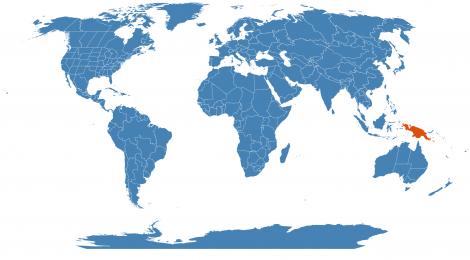
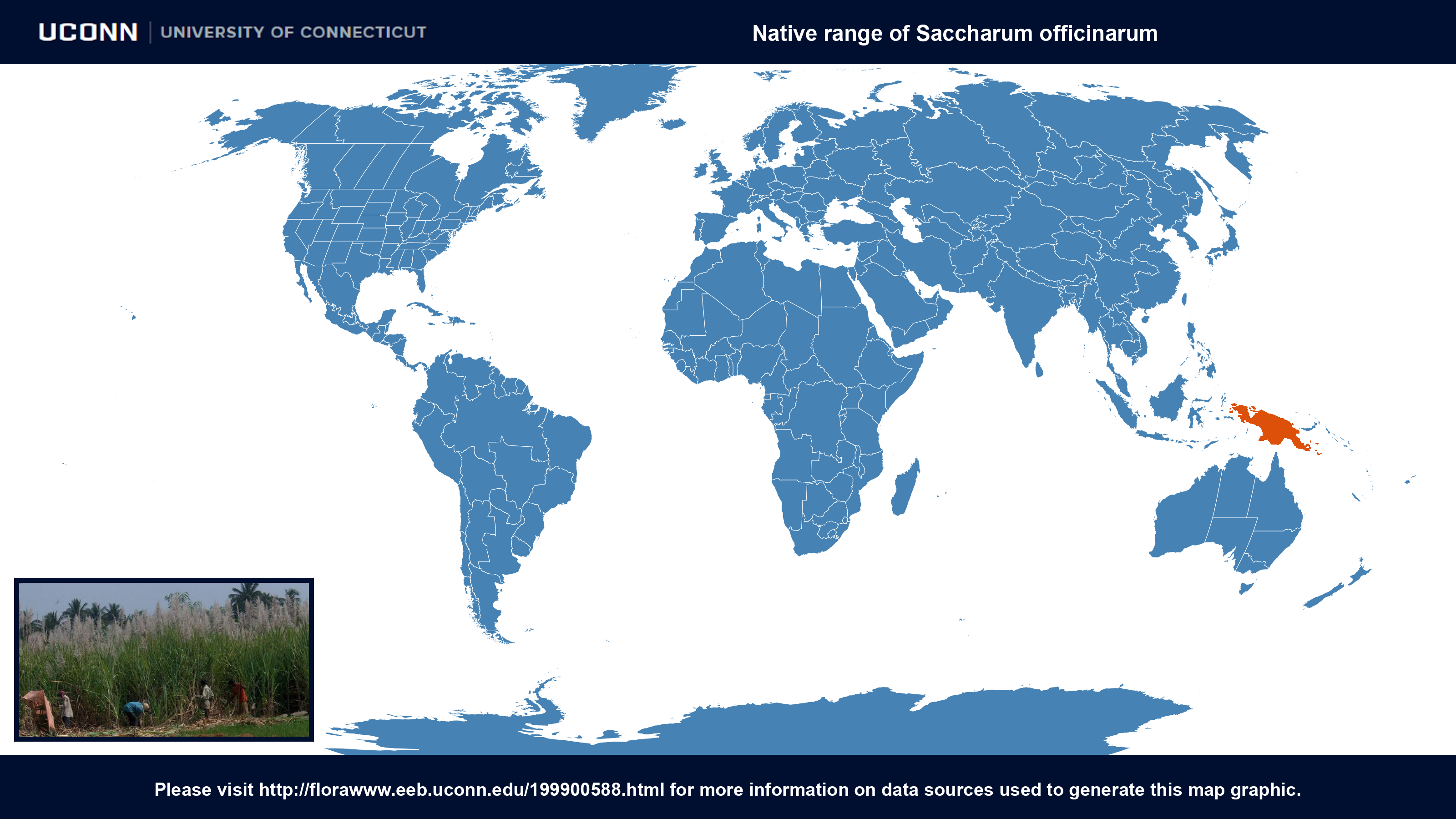
- Country of Origin: New Guinea
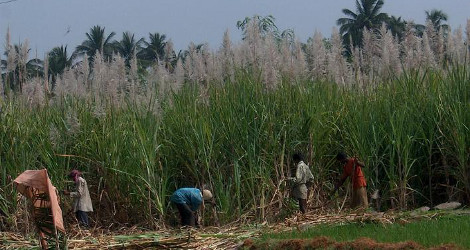
- Description: Very tall, stout perennial grass up to 15 feet high, with solid yellowish-green canes 3/4 to 2 inches thick, rich green leaves, arching.
- Uses: Cane sugar, cane syrup, molasses, wax, and rum are products of sugarcane. Molasses is used as a sweetener, in industrial alcohol, for explosives, synthetic rubber, and in combustion engines. Fresh cane stems are often chewed, especially by poorer people. Sugar is used as a preservative for fruits and meats; cane is also made into a liqueur. The young unexpanded inflorescence of 'tebu telur' is eaten raw, steamed or toasted, and prepared in various ways. Refuse cane (bagasse) is used in the manufacture of paper, cardboard, and fuel. The reeds are made into pens, mats, screens, and thatch. Sugar is a common adjunct to unpleasant medicines. Some races are considered magical and are used ceremoniously.
Reported to be antidote, antiseptic, antivinous, bactericide, cardiotonic, demulcent, diuretic, intoxicant, laxative, pectoral, piscicide, refrigerant, and stomachic. It is a folk remedy for arthritis, bedsores, boils, cancer, colds, cough, diarrhea, dysentery, eyes, fever, hiccups, inflammation, laryngitis, opacity, penis, skin, sores, sore throat, spleen, tumors, and wounds
- Culture: Propagated by stem cuttings, but seed produced in the tropics assist in the production of cvs through hybridization. Lime in the soil is considered beneficial for the proper development of the sugar content of the canes. Manuring is indispensible as the crop is an exhausting one. It is generally grown for many years in the same ground, without rotation or rest.
- USDA Zone: 8a-10b
Accession Data:
- Accession # 199900588
- Source: Joan Leonard - Ohio State
- Accession Date: 10-20-1999
- Bench: 1216 - AUS:Ground Bed 2 SW
- Currently: active - healthy
- Qty: 2 confirmed on 11-26-2024
Classification:
- Division: Magnoliophyta
- Class: Liliopsida
- SubClass: commelinids
- Order: Poales
- SubOrder:
- Family: Poaceae
- SubFamily: Panicoideae
- Tribe: Sacchareae
- SubTribe: Saccharinae
Flowering Data:
This accession has been observed in bloom on:| Year | Jan | Feb | Mar | Apr | May | Jun | Jul | Aug | Sep | Oct | Nov | Dec | ||||||||||||||||||||||||||||||||||||||||
|---|---|---|---|---|---|---|---|---|---|---|---|---|---|---|---|---|---|---|---|---|---|---|---|---|---|---|---|---|---|---|---|---|---|---|---|---|---|---|---|---|---|---|---|---|---|---|---|---|---|---|---|---|
| 2025 | ||||||||||||||||||||||||||||||||||||||||||||||||||||
| 2024 | ||||||||||||||||||||||||||||||||||||||||||||||||||||
| 2023 | ||||||||||||||||||||||||||||||||||||||||||||||||||||
| 2022 | ||||||||||||||||||||||||||||||||||||||||||||||||||||
| 2021 | ||||||||||||||||||||||||||||||||||||||||||||||||||||
| 2020 | ||||||||||||||||||||||||||||||||||||||||||||||||||||
| 2019 | ||||||||||||||||||||||||||||||||||||||||||||||||||||
References (internal):
- Fiber Plants
- Spice Plants
- Type Species
- Scavenger Hunt - Grades 9-12 (generic)
- Domesticated Plants of Austronesia
- EEB Greenhouse Holdings native to: New Guinea /
References (external):
- James A. Duke. 1983. Handbook of Energy Crops. unpublished {from New Crops Website at Purdue}
- The Plant List (2013). Version 1.1. Accessed 17 February 2015.
- WCSP (2015). World Checklist of Selected Plant Families. Facilitated by the Royal Botanic Gardens, Kew. Accessed 17 February 2015
- Saccharum officinarum at Wikispecies. Accessed 29 July 2015.
- at Wikipedia. Last accessed on Thursday, July 06, 2017.
- Image #00 (cropped) and #01 (original) by Mette Nielsen. Licensed as Creative Commons Attribution-Share Alike 3.0 Unported from Wikimedia Commons. Last accessed on Thursday, July 06, 2017.

data regenerated on Fri, 14 Mar 2025 11:30:03 -0400 [bcm v4.0]
Images:
Additional images for this accession:
Click on thumbnails to enlarge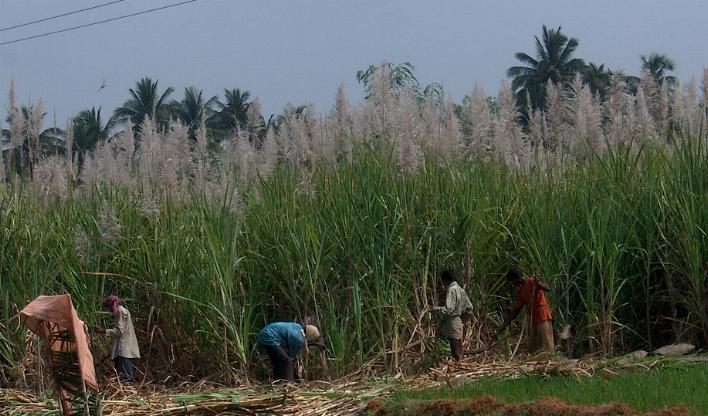
Current Accessions in the Poaceae
Subfamily Bambusoideae
Tribe Arundinarieae
Subfamily Bambusoideae
Tribe Bambuseae
Subfamily Bambusoideae
Tribe Olyreae
- Parianinae: Eremitis sp.

Subfamily Chloridoideae
Tribe Zoysieae
- Sporobolinae: Spartina bakeri

Subfamily Oryzoideae
Tribe Oryzeae
- Oryzinae: Oryza glaberrima
- Oryzinae: Oryza sativa
Subfamily Panicoideae
Tribe Andropogoneae
- Andropogoninae: Cymbopogon citratus
- Andropogoninae: Schizachyrium scoparium
Subfamily Panicoideae
Tribe Paniceae
- Boivinellinae: Oplismenus hirtellus 'Variegatus'
- Cenchrinae: Stenotaphrum secundatum
- Panicinae: Panicum sphaerocarpon
Subfamily Panicoideae
Tribe Sacchareae
- Coicinae: Coix lacryma-jobi
- Saccharinae: Miscanthus sinensis 'Zebrinus'
- Saccharinae: Pogonatherum crinitum
- Saccharinae: Saccharum officinarum
- Tripsacinae: Zea mexicana
 = indicates flowering in past 14 days
= images available for this accession
= map available for this accession
= indicates flowering in past 14 days
= images available for this accession
= map available for this accession
 = accession added within past 90 days